
Sermon Text (Original document available below):
A SERMON PREACHED AT THE CONSECRATION OF THE BISHOP OF LONG ISLAND: A. D. MDCCCCII
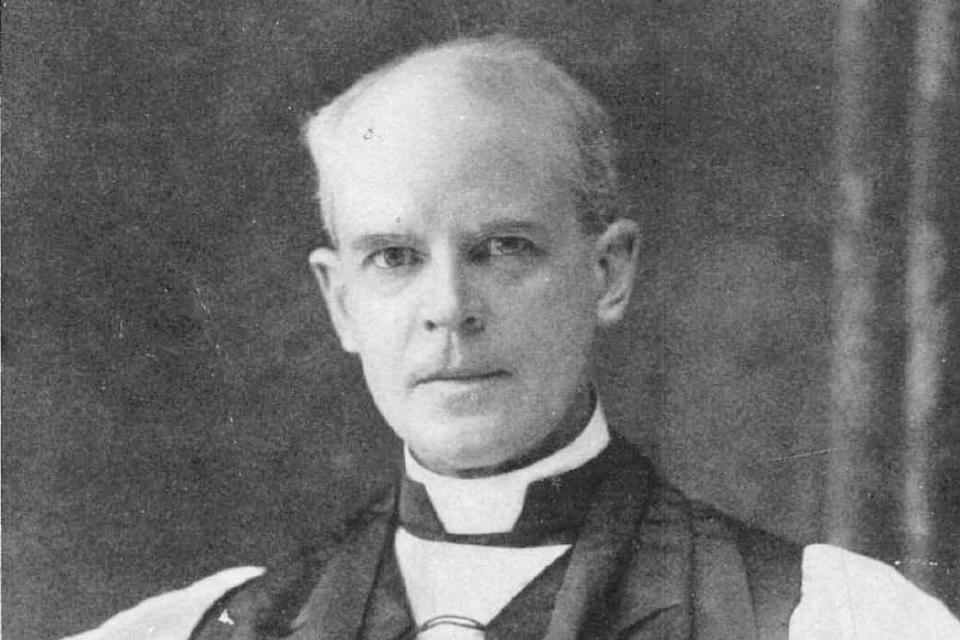
A SERMON PREACHED BY THE RIGHT REV. WILLIAM CROSWELL DOANE D.D., LL.D., BISHOP OF ALBANY, AT THE CONSECRATION OF THE REV. FREDERICK BURGESS, D.D., AS BISHOP OF LONG ISLAND IN GRACE CHURCH, BROOKLYN HEIGHTS ON WEDNESDAY, JANUARY FIFTEENTH ANNO DOMINI MDCCCCII
ACTS XX. 24, 27
TO TESTIFY THE GOSPEL OF THE GRACE OF GOD. TO DECLARE UNTO YOU THE WHOLE COUNSEL OF GOD.
No one who has ever answered, no one who has ever asked, the first question in the Office for the consecration of a Bishop can ever forget the searchingness and the solemnity of the words, "Are you persuaded that you are truly called to this Ministration, according to the will of our Lord Jesus Christ, and the order of this Church?". It is the doorway of entrance to the conferring of the Order and the consecration to the Office of a Bishop in the Church of God. All the preliminary steps have been taken. The rightful differences of personal preference and choice have been settled. The election has been completed and confirmed. The commission to consecrate has been issued. The presentation has been made. The testimonials have been demanded and received. The promise of conformity has been required and made. The prayer has been offered by the congregation. And the Bishop-elect stands now alone, before the consecrator, "to be examined in certain Articles, to the end that the Congregation may have a trial, and bear witness, how he is minded to behave himself in the Church of God." And this is the first article in the examination. You will keep hearing it, my brother, over and over in your life. It recurs to all of us from time to time—"Are you persuaded that you are truly called to this Ministration, according to the will of our Lord Jesus Christ, and the order of this Church? I am so persuaded."
If I may help you somewhat to realize the clearness and the fulness of this persuasion, without which no man could dare to take the office; and to recognize the range and reach of this ministration, I shall have discharged what seems to me my best service to you in this supreme hour.
It goes without the saying that the Order or Office of a Bishop in the Church of God is as permanent and as perpetual as the Church of God. And it is no less plain, it seems to me, that, as in every living thing, so in the Church Catholic and in the historic episcopate, remaining in their corporate condition always the same, there must be the variation of adaptability to the changing conditions of the world. I know that this statement has in it an unwelcome sound to certain minds. Clinging to the watchwords of "evangelic truth and apostolic order," of the primitive faith and the historic episcopate, as we must most tenaciously,—some people are unwilling to admit the element of variation in methods and means, without which conservatism degenerates into the dry deadness of a fossil relic. But it is true, and all history shows it, inspired and uninspired, that the most fundamental and essential things must conform themselves to circumstances and changing conditions, or else remain apart from the thought and life of the age. I believe that in spiritual things, as in things physical and natural, there must be always salt and light and leaven to preserve that into which they are put, from decay or deadness or darkness. But the three preserving elements will change their shape, as chemistry and science alter and improve their form. The bishop of to-day, perfectly the Apostle in his order and office, is not the apostle at whose "feet are to be laid down" the common properties of the members of the Church, nor the apostle who can give himself "to prayer and to the ministry of the word" with no concern for the details of administration. Just as the name has undergone the change from Apostle to bishop, so has the office, not in its principles but in its practice, not in its character but in its operation, changed over and over again in the varying circumstances of place and time. And the American bishop of this nineteenth century cannot be a reproduction of S. Paul or S. Timothy, any more than he can, with any hope of service and usefulness, attempt to reproduce Aidan or Augustine or a Prince Bishop of Durham or a mediæval Pope.
What then is the ministration of a bishop of to-day, to which my brother has been called? In principle it is first the "testifying of the gospel of the grace of God," and then "the declaration of the whole counsel of God." I cannot but think that this first function is the personal testimony of a bishop's life. Διαμαρτύρασθαι the expression is, with its suggestion of the martyr, and its essential element of witnessing. Marked, perhaps beyond all other men, S. Paul's personality witnessed to the gospel of God's grace, which had converted him, chosen him, called him, commissioned him, consecrated him. His very presence, his life itself, quite apart from his high office, witnessed to the Gospel, the good tidings that spoke to him and opened the eyes of his understanding and laid open his whole submitted nature to the grace which came with the message, enabling him to "do all things through Christ who strengthened him," so that he could say "It is not I, but the grace of God which is in me." And yet nothing can be more marked than the distinct individuality of the man, set forth in clear-cut outlines of difference from other apostles and other saints. The graces of his character quite differed from the same graces in other men—his zeal, his love, his humility, his devotion. "Non omnibus una nec diversa tamen qualem decet esse," as the old Latin poet said; or as S. Paul himself stated it, "diversities of gifts but the same Spirit." If one may take the figure of our Lord's own description of this man, "a vas electionis," a vessel, and add to it the thought of old Gideon's dream of a pitcher with a lamp inside, it will bring out the meaning: each vessel with its own peculiar shape and size, only brought out by the illumination of the indwelling light, not to be broken as they were in the hands of Gideon's host; and yet, if need be, to be broken, if so the light shine out more clearly, through a "life laid down." Surely this must be the first thought, as it is the chief function, of a bishop's life: "in all things an example of good works unto others, setting forward quietness, love and peace among all men, showing himself gentle, and being merciful for Christ's sake, to poor and needy people and to all strangers destitute of help." I am always thankful for this last touch of tenderness, coupled with the stern requirement of rule; and for that last charge, which stamps, as a seal upon the warm wax of the heart in the moment when it is softened by intensest feeling, the very image of Christ Himself: "Hold up the weak, heal the sick, bind up the broken, bring again the outcasts, seek the lost."
And this life is to be lived in the outdoors of our modern day. Surely it teaches us that by all means within our power, and in all ways within our reach, we are to touch the men and the women, the great interests and activities, the institutions, the corporations, the social questions, the live issues, the things that men are thinking and talking about, and the things that they are doing now. The daily drudgery of official detail; the laborious journeys of our delightful visitations; the reading and study of the sacred Scriptures and of the books that bear upon all subjects along the line of our own work and in the life of our generation; and the time saved for thought and prayer, —all these absorb and occupy our lives. But somehow time must be made for influencing, by our personal witness of the gospel of God's grace, the world outside of ourselves or of our own specific round of service. I am proud to remember the example of my own dear father's work, as the great Bishop that he was, which was instinct with interest and energy in all public questions and in every patriotic issue. It is an inspiration and a lesson to remember that the two great Bishops of Durham in our time, scholars and saints both of them, were settlers of strikes among the coal-miners in England. And I am glad that it was a Bishop who opened the way for the great movement of municipal reform in Greater New York. Our common citizenship, our common Christianity, our common humanity demand our contact with, and our concern about, all human things. And it is not the least argument for this that we, who cannot take partisan lines in politics, and cannot be in external and ecclesiastical communion with the ministers of other religious bodies, can in this way break down barriers of personal separation; and bring men into mutual understandings; and remove prejudices of exclusiveness and isolation in the broken and separated religious life of our time: and also in this way make common cause with the leaders of municipal and political movements, helping to shape them toward higher issues, and to flavour them with the spirit of the city of God on earth.
And for the other part of it, the office of the ἄγγελος, the angel, the proclaimer of God's truth, the messenger to men, the preacher, I am glad to feel that the day has gone by which overshadowed the Altar with the pulpit and subordinated Sacraments to sermons; and also the day that counted preaching "foolishness," and so made preaching foolish by its neglect. I believe the office of a bishop as a preacher needs magnifying. Apart from the opportunity in his own Cathedral church, he has the rightful entry and the glad welcome into all the churches of his diocese. He comes unhampered by any local limitations of his freedom. If he is wise, he will get some impression, directly or indirectly, as to what the people of a parish need. As he goes on, by years of constant and close relationship, he will know for himself the people's needs. He speaks to people who, from curiosity, or interest, or courtesy, come in unusual numbers to hear him. He speaks to people whose hearts are touched and moved either as candidates for confirmation, or as having a close sympathy, parental, personal, or friendly, with those to be confirmed. In a way, he has the largest opportunity for preaching that a man can have. And the one general principle of his teaching must be the declaration of "the whole counsel of God"; which does not mean of course the attempt to convey all the revelation of faith and duty in each sermon; but which does mean that, wholeness, roundness, proportionateness, symmetry, the ἀναλογία τῆς πίστεως must eminently characterize all apostolic preaching, as it ought to characterize every other prophetic presentation of truth. And this again is to be in our broad, modern, American daylight, one might almost say our searching, modern, American electric light. What shall its form be for us to-day?
There is a popular outcry against what are called doctrinal sermons. It is baseless and unmeaning, for doctrine means teaching and the preacher's business is to teach. With the whole of the Holy Scriptures open before us, as a well from which to draw the water of refreshment, we have two most wise and helpful guides for the "opening of the Scriptures" to those who are "fools and slow of heart to believe." First, the catholic creeds in their logical, successive statements of the facts of Christianity, and then the serial progress of the Christian year, in which these facts succeed each other
"in set career,
As through a zodiac";*
and through which He Who is the fact, the end, the life of all revelation and of all religion, moves in and out before us, reviving into the vitality of a vision of Himself and of a sound of His own voice, the holy life which He lived as our example and our sacrifice. And after all, as He is the single and central object of the Scriptures which "testify of Him," the One "of Whom Moses in the Law and the Prophets did write," the One to Whom the Law leads us, as the pedagogue, the child, to school, the One Whom the Gospel reveals to us, Whom the Epistles describe to us, Whom the Apocalypse unveils to us, we may well set ourselves, as the apostle did, to know nothing else, teach nothing else, and preach nothing else "save Jesus Christ and Him crucified." So far as this is dogma, doctrine, it is the one message of the Christian prophet. But the method of its delivery must vary just as the inspired books of Holy Scripture differ from each other, each writer never losing his identity, although "borne along by the Holy Ghost"; and must be governed by seeing and seizing on the needs and the opportunities of the people and the time. No man can read the great sermons preached at Paul's Cross in the seventeenth century, by Jewel and Donne, and then in S. Paul's Cathedral in our own century by Liddon and Church, without recognizing that the men could not have changed places or the sermons have changed time; and without recognizing also how saturated the preacher of the changeless truth must be with the temper and tone of his age.
The declaration of the whole counsel of God which we are called upon to make is the courageous denunciation of the sins of the time, the proclamation of salvation as being God's offer not of remission of penalty but of riddance of sin, both uttered out of the consciousness of a fellow sinner's sympathy with other temptations than his own, and followed by public efforts to help in the removal of temptations, in the betterment of conditions, in the obtaining of better laws, in the securing of their more honest administration. Beside this, it must be the insistence upon the truth that the salvation which Jesus brings is something here and now, is the healing of sin and the removal of its presence out of our life on earth. We are face to face everywhere with problems of irreligion and immorality, as the preacher of righteousness has always been. The mere denunciation of them will not save one boy from the loss of his purity, or one girl from shame, or one man from drunkenness, or one home from desecration, or one life from degradation. "Knowing the terrors of the Lord we must persuade men." It is ours to help in the solution of the great problems of modern society; to insist, as the present Bishop of London has said, that it is blasphemous "to think that God made His physical laws, so that men could not obey His moral laws." The observance of the Lord's Day in restful as well as in religious ways; the regulation, within bounds of decent safety, of the liquor traffic; the protection of young people from the contamination of vice and sensuality; the banishment of the professional gambler whose ruinous traffic is no less destructive of conscience and character than lust and liquor are,—these things we must strive for. Skulking in the dark, or stalking out in open day, these are the enemies of the gospel of the grace of God. Laws must be made to control them, must be enforced to punish them, must be executed to prevent them. Ours is the deeper duty to proclaim the message and to offer the means, of the reformation, of the transformation of man's nature. O for the preaching of a crusade to rescue from the control of infidelity and indifference the thousand sepulchres of the souls of men in which a dead Christ is buried, Who was once alive in them, Who can be raised up again in them. And all this is not on the east side or the west side of any city; all this against the sins of the rich as well as against the sins of the poor; against the polygamy of modern divorce; against impurity and infidelity in man or woman in whatever station and under whatever name; against the unknown Samaritan woman with her seven husbands, but also against Herod on his throne with Philip's wife; against the sin of gambling in the drawing-rooms of the rich, in the "hells" of the baser sort, or in the immoral recklessness of the stock market. God's whole counsel, God's counsel to everybody, God's counsel about everything that makes for virtue, that rebukes vice, that calls sin by its own name, that helps men to live as they would want to die and to die so that they will live forever, this is our mission and our message to this age.
Let me ask you to consider in quite another direction our duty as to the deliverance of the whole counsel of God. If we are to have part in the lessening, and, please God, by and by, in the ending, of that which is the great hindrance to the progress of religion in our day, the fractions and multiplications of sects, "the unhappy divisions of Christendom," we have need to set ourselves faithfully and wisely to that for which I believe the Protestant Episcopal Church has the greatest opportunity and consequently the most tremendous responsibility of any religious body in America, namely, the proclaiming of our heritage of proportionate truth. We are in danger, it seems to me, of disproportion, of misdirection in our thinking and teaching and preaching. The personal temperament, the inherited tradition, the association with what are called schools of thought, all these, each of great value if subordinated to more important things, tempt every one of us to be one-sided, to be insistent upon half-truths, to imagine or invent a doctrine of a standing or a falling church. Exempli gratia! Experience shows us that it is part of our attractive power in the world to-day that we have a liturgical service, ordered with great decency and dignity, and really ordered, not only in its offices as to what to use, but in its rubrics as to how to use them. It is part of our recognition of the solemnity of worship that scrupulous care should be given to the appointments of the house of God, to the reverent conduct of His worship, to symbol and act and manner, to the music and the movement and the whole setting of the service. But after all, these are accessories, and when the mind gets so absorbed in these, that the one effort of the minister and the one test of soundness and success in his ministry turns largely on external things, there is an absolute absence of wholeness from even this ritual declaration of the gospel. And when the movement goes beyond this, imports and insists upon foreign names and titles, restores the use of the reserved Sacrament—questionable for any purpose to use it for the un-catholic purpose of a so-called benediction with it, measures the growth of catholic truth by the number of mediæval milestones that mark its crab-like progress, and perverts valuable and venerable customs into compulsory enactments of binding obligation, then it seems to me the chief pastors of the Church are called on to speak out, not bitterly and controversially, but in the appeal to the reasonableness of men's minds and the honesty of men's consciences, to the danger of offence to the average man, to the unattractiveness of anachronisms. This seems to me a larger question than the surface of it shows. It is our function to proclaim to men, irreligious and indifferent, unshepherded, distracted with divisions, asking with Pilate's icy carelessness "what is truth," or with Gallio's cynical cold-heartedness caring "for none of these things"; it is our function to proclaim that part of God's counsel involved in His establishment on earth of the one Holy Catholic and Apostolic Church. We ought to do it in such sort as shall offer to great multitudes of Roman Catholics, a catholicity which is un-Roman, which denies and disproves the fable of the Petrine claims, which offers only primitive terms of communion, which teaches only the faith of the undivided church. And at the same time in such sort as shall attract by its gospel teaching, by its appeal to history, by its evidence of continuity, consistency, and catholicity, the multitudes of those who, like ourselves, protest against the corruptions in doctrine and morals of modern Romanism. Abating nothing of our claim to the possession of a ministry derived by unquestioned lineage from the age of Christ, and offering, to those who hold so much of truth in common with ourselves, what we believe we have, of order and worship which conserve them both, our duty to-day is by the wholeness of our proclamation of God's counsel, to "commend ourselves to every man's conscience in the sight of God." It is sheer blindness, alike to natural facts and to the spirit and temper of the age, to imagine that we are likely to fulfil our mission to the age, to the country in which we live, by harking back to forms and phrases belonging to a communion which is foreign in its allegiance, in its constitution, and in its character, to the American people and to the century in which we live. The eye that looks out for a restored unity in Christendom to-day must see the present, must look toward the future, must cling to a primitive and not a modern past, must oppose and not assimilate itself to the Papal assumption and the Roman claim. The emptiness and idleness of mere momentary associations, falsely called unions, between or among religious bodies merely agreeing to disagree, has in it no substantial promise or power. There is great hope from co-operation in all matters of public interest, of charity organization and of movements for reform, bringing together Christians of all names and people of the old Hebrew religion, because they make for mutual understanding and confidence. But the real aim and effort must be toward a deeper and more interior oneness in belief and worship. From God's side, one dares not despair of this in any direction: but speaking humanly and so far as we can see, is it not a self-evident fact that we have far more in common, in all our religious thought and faith, with the Protestant than with the Roman world; with historic Presbyterianism, for instance, than with the Papacy whose history is not a day older, since both date back as separatists and sectarians to the time of the Council of Trent? Surely the great evangelical verities of the catholic creeds, which we hold in common with the Protestant communions, are a far closer bond with them than can be knit with the modern Roman additions to the ancient creeds, which have out-tridentined Trent in their unsoundness, since the decrees of the pseudo-councils of our own day. And while differences about Order are less difficult to deal with than radical divergence in doctrine, is there not more hope in looking for unity with those, who acknowledge the validity, while they do not accept the necessity, of our orders, than with those who flaunt their authority and deny their authenticity?
The attitude of the Roman communion to-day is to many of us inexplicable in the face of indisputable facts. Dropping in common parlance the legitimate limitation of its own self-chosen name of Roman, it has been allowed by our carelessness to call itself, what it is not, even in the symbol of its own faith, the Catholic Church. Basking in the purified atmosphere of a strong Protestant influence, it constantly ignores the historic horrors of its uncontrolled domination anywhere, which one of their own priests publicly declared to have produced in our time "a catholic nation without Christianity." One says this not in bitterness, but in sadness, with the prayer and hope for the uprising of a modern Savonarola to preach a reform from within. Meanwhile I believe it to be our most solemn duty, and I thank God we are rousing to do it, to present and proclaim, to all who will hear, the counsel of God, in this part of its wholeness; that there can be Order in the ministry and dignity in the worship, without the subordination of that Order to a foreign hierarchy, and without the withdrawal of the Liturgy from the language of the people, or the substitution of even the holiest humanity, for the worship of God alone. Surely the hope of restored unity lies, not in the dream (which is not even iridescent) of procuring the infallible reversal of an infallible decision by an infallible man, but in persuading men who own themselves fallible as we are, to consider and correct what mistakes have been made in the past; and in being ready ourselves to study with them the method by which the breaches, made by impatience and inaccessibility three centuries ago, may be healed by the wiser counsels of the present. Novelties in phraseology, which have somehow drifted into the still fluent flux of a Confession, are easier to deal with than articles which have hardened themselves, under the ban of an anathema, into the solid substance of a creed. And when we have learned that creeds deal with facts and not with opinions, that creeds are the anchorage of the fundamental verities to which we hold fast, with a large leeway in the open sea of religious opinions, we shall find the individual liberty, which thinking men demand and which thinking men are free and safe to have, just because they are made fast safely to the severe simplicity of "the articles of the Christian faith." For the wholeness of the counsel of God is exclusive as well as inclusive, taking in, in its wide sweep, all that is of faith, all truth "necessary to eternal salvation," and shutting out from the closed completeness of its rounded circle, things contrary to, and also things "not concluded by the Scriptures."
My dear brother, if, as I believe, I have spoken for you in what I have said, meaning at least to speak not only for the Bishops present, but for the episcopate of our reformed and catholic Church, you will permit me to add a single word to welcome you to the dignities and duties of our office. The lot that fell upon Matthias has "fallen unto you in a good ground," and you have received here "a goodly heritage." Nowhere in all the story of the Church in America has there been a Bishop safer, saner, and sounder in the witness of his life and the declaration of his principles, than the first Bishop of Long Island. And the diocese to-day equipped for worship, for education, for mercy, in its Cathedral, its schools, its old Charity Foundation, offers you at the beginning the things that some of us have hardly won, toward the close of our episcopate. With the foundations laid in all diocesan organization, you are free to work for the edifying and extension of the Church. You bring back to our American succession a name that has already twice given honour to its annals. Furnished with natural gifts, with scholarly attainment, with sufficient and successful experience in your priestly and pastoral work, you will go on from to-day along the higher and harder but infinitely happy pathway of a bishop's life, endowed, not with the authority only, but with the grace of the holy Order. "Remember that thou stir up the grace of God" which will be "given thee by the imposition of our hands," and "in the spirit of power and love and soberness" "testify the gospel of the grace of God," "declare the whole counsel of God," and "may God accomplish in you the good work which He hath begun."
* "The way before us lies
Distinct with signs, through which in set career,
As through a zodiac, moves the ritual year
Of England's Church."
Wordsworth: Ecclesiastical Sonnets, xix.