
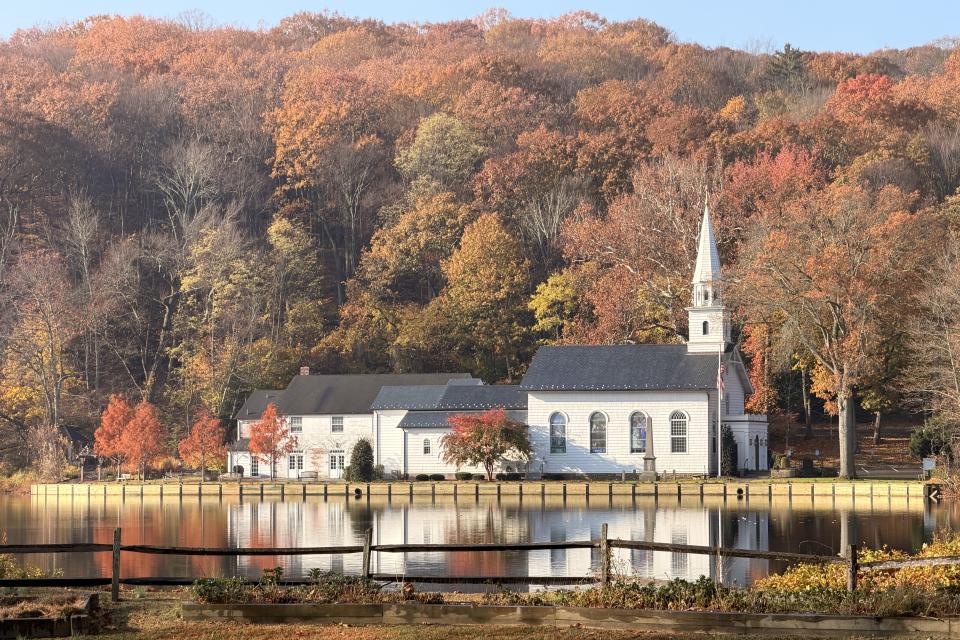
It has been said that it’s one of the most photographed churches in the world. “And I believe it,” said Fr. Gideon Pollach.
Whether or not the claim can be proven, a quick Google search of St. John’s Episcopal Church in Cold Spring Harbor immediately results in a striking array of images: the white country church set against a sparkling pond, surrounded by foliage reflecting the changing seasons. It is undeniably a scenic place, the kind of landscape one could imagine immortalized in oil on canvas.
“We’re all very aware that this beautiful church is in a privileged spot,” Pollach said. “We sit on this beautiful 14-acre pond. The beauty of the church is linked to the beauty of our pond. You can’t separate the two.”
Over time, the parish’s relationship with the land around it deepened. St. John’s created a meditation garden and a “grow-to-give" vegetable garden, while Pollach’s thinking was also influenced by clergy associated with the parish, including the Rev. Jesse Lebus, a Franciscan brother who once served his curacy at St. John’s.
“He expanded our understanding of companionship to include, as St. Francis did, the birds and the animals that live in and around the pond,” Pollach said.
That growing sense of companionship also began to reshape Pollach’s understanding of environmental stewardship.
“We so often view stewardship as human-centered, but over time, I’ve begun to view the pond and the animals that live in and around it almost as spiritual guides and teachers,” he said. “The human is further and further away from the center of the story, and we’ve tried to move God more fully into the center of the story.”
This reframing has led Pollach to look anew at the biblical story of creation and humanity’s place within it.
For Pollach and the people of St. John’s, this reorientation has also meant looking at the land around them with fresh eyes and considering what it means to live in relationship with it. It has meant literally removing fences in some cases.
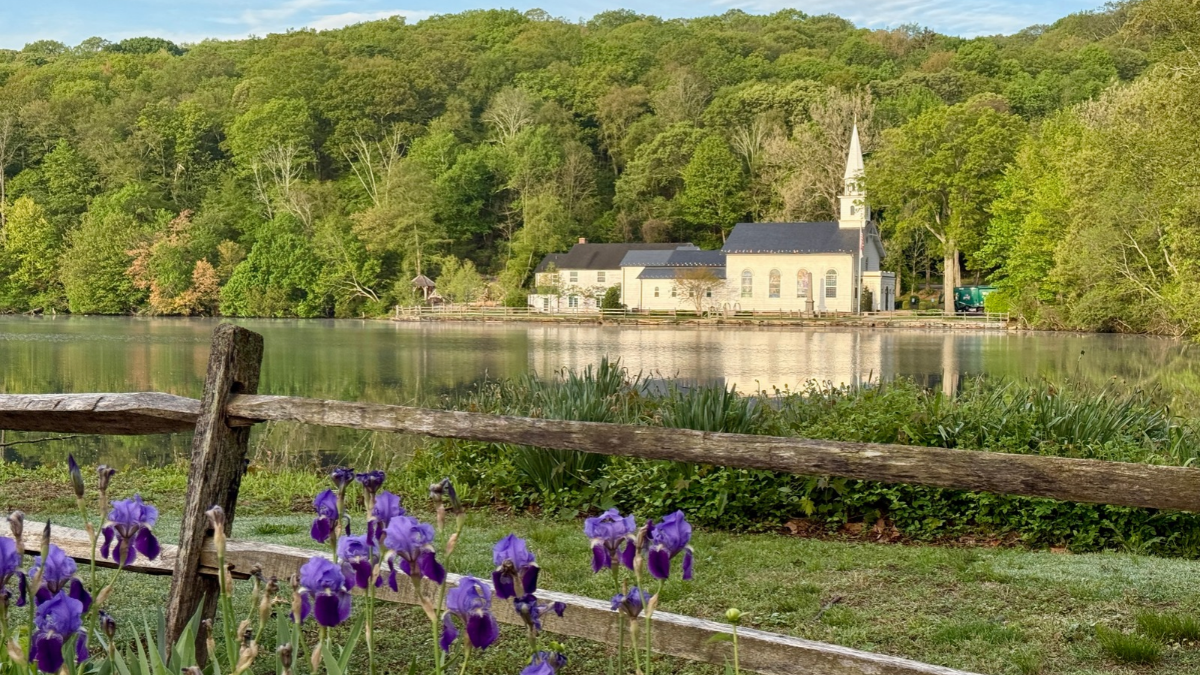
“Every fence is the same fence. It separates us from each other, from creation, and it also separates us mentally from God. And so, we’re taking down fences and trying to expand our sense of connection.”
Taking those fences down has also meant learning to pay closer attention to what is happening on the other side of them. Pollach’s recent weekly written reflections have all been prompted by something that he has observed or learned from the pond and the creatures that live in and around it—from birds migrating overhead to a recent encounter with a river otter walking along a nearby path.
The reflections are also available as a podcast and form part of the larger BlueGreen Theology Project, which Pollach has been developing over the past decade. The project includes a collection of resources for prayer and meditation tied to different natural settings and liturgical seasons; many of them designed to be interactive. In A Canticle of the Birds, for example, users can choose which birds to pray with, with certain species highlighted according to the season in which they are present.
“When I came here, a lot of people would say that they had some of their most profound spiritual experiences on their boat, while golfing, while hiking outside,” Pollach said. “The point of this project is to try and learn a new language, because the ecological crisis is a real thing, but I think if we’re going to find solutions to it, it’s only because we have a spiritual conversion first.”
The BlueGreen Theology tools are available free of charge at: https://bluegreentheology.org/.